


The first victims of Cuban communism are the Cuban people.
They were the ones that suffered the terrorism of the July 26th Movement that carried out a hundred bombings in Havana in one night.
They were the ones that suffered the summary executions in the early days of the revolution.
There are over a thousand political prisoners currently in Cuba’s prisons today.
Jose Daniel Ferrer was a member of the Christian Liberation Movement that sought through the existing legal system to pursue change through the Varela Project.
The response of the dictatorship was to lock up Jose Daniel Ferrer and 74 others in 2003 to long prison terms.
In his case they threatened him with a death sentence for gathering signatures in a citizen petition drive.
Oswaldo Payá who was the head of the initiative together with his youth leader Harold Cepero were murdered by agents of the Cuban government in 2012.
We also cannot forget that next year will be the thirtieth anniversary of the shoot down of two Brothers to the Rescue planes.
Brothers to the Rescue was an effort by Cubans and Cuban Americans to save the lives of Cubans in the Florida Straits. Because they were nonviolently engaging with the dissidents on the island the regime felt it was unacceptable and they sent out MiGs that blew two civilian planes out of the sky in international airspace.
However that is not our focus today but the harm Havana has done to U.S. national security, and the role the Cuban dictatorship has played in destabilizing the Western Hemisphere.
Cuba remains a threat to U.S. national security
I would like to begin by dispelling some myths that all too often are spread in the Academy. One is that Fidel Castro was driven into the arms of the Russians by the Americans.
This is not true. We now know thanks to the Soviet archives after the collapse of the Soviet Union in 1991 that the initial contacts with the KGB and the Castro brothers was in 1953.
Early contacts with the KGB (1953)
“The KGB’s leading Latin American expert, Nikolai Leonov, who was the first to make contact with [Raul] Castro, wrote later, ‘Cuba forced us to take a fresh look at the whole continent, which until then had traditionally occupied the last place in the Soviet leadership’s system of priorities.’- The charismatic appeal of Castro and ‘Che’ Guevara extended far beyond Latin America,” wrote Christopher Andrew and Vasili Mitrokhin in The World Was Going Our Way: The KGB and the Battle for the the Third World – Newly Revealed Secrets from the Mitrokhin Archive published in 2006.
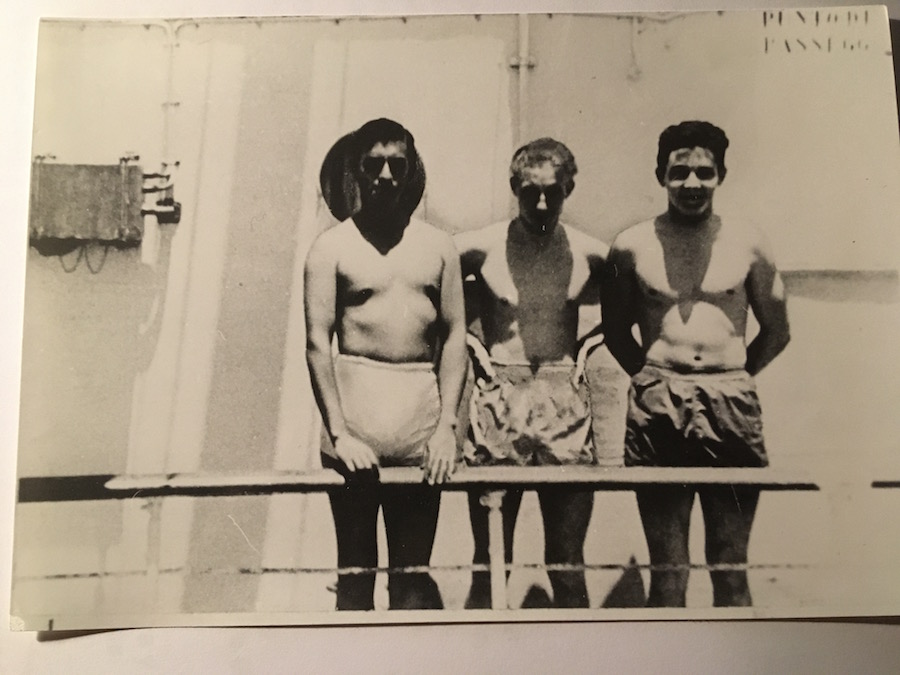
Leonov (center). On his right, Raúl Castro. To his left, Guatemalan Bernardo Lemús. ( CTXT)
Raul Castro and Nikolai Leonov first met in 1953, and struck up a relationship that would endure for 69 years, until Leonov’s passing in 2022. On March 11, 2016, Leonov was interviewed on official Cuban television in the Mesa Redonda program about his supposed first encounter with Raul Castro on a trans-Atlantic voyage. Vasili Mitrokhin, a former KGB archivist who defected to Britain in 1992, offers a different report obtained from classified files. Leonov and Raul Castro “became ‘firm friends’ in Prague in 1953 and then worked together with Fidel from 1956 and after he took power in 1959.”
The U.S. Arms Embargo on Batista
At the same time that the United States was placing an arms embargo on Fulgencio Batista in early 1958, and receiving representatives of Fidel Castro’s July 26th Movement in Washington DC, the Soviet KGB already had a firmly established relationship with the Castro brothers.
On March 17, 1958 Fidel Castro’s future candidate for provisional president, Manuel Urrutia, along with a delegation of other supporters in exile of the July 26th movement, met with officials at the State Department. They successfully lobbied the U.S. government arguing that arms shipments to Cuba were for hemispheric defense, and they claimed that Batista using them against Cuban nationals was in violation of the conditions agreed to between the two countries.
Batista’s regime presented to the U.S. Embassy in Havana a formal note protesting the delay in the shipment of M-1 rifles to the Cuban Army, and warned that it would weaken the Cuban government and lead to its possible downfall.
The United States placed an arms embargo on the Batista dictatorship in March 1958.
On March 26, 1958 in another telegram from the State Department to the U.S. Embassy in Havana the view was expressed how the arms embargo could lead to the fall of Batista’s regime:
“Department has considered the possibility its actions could have an adverse psychological effect on GOC and could unintentionally contribute to or accelerate eventual Batista downfall. On other hand, shipment US combat arms at this time would probably invite increased resentment against US and associate it with Batista strong arm methods, especially following so closely on heels of following developments:
Government publicly desisted from peace efforts.Government suspended guarantees again.Batista expressed confidence Government will win elections with his candidate and insists they will be held despite suspension guarantees but has made no real effort to satisfy public opinion on their fairness and effectiveness as possible means achieve fair and acceptable solution.Batista announced would increase size arms and informed you he would again undertake mass population shift Oriente, and otherwise acted in manner to discourage those who supported or could be brought to support peaceful settlement by constructive negotiations.”
The United States would continue to pressure Batista to hold free elections and leave office for the remainder of 1958. Earl E. T. Smith, the U.S. ambassador to Cuba, on December 17, 1958 delivered a message from the State Department to Fulgencio Batista that the United States viewed “with skepticism any plan on his part, or any intention on his part, to remain in Cuba indefinitely.”
The U.S. government had dealt the Batista regime a mortal blow, and fourteen days later the Cuban dictatorship fell.
Fulgencio Batista fled into exile on January 1, 1959, and the United States quickly recognized the revolutionary government of the Castro brothers.
The Castro brothers’ newly established Cuban government was acknowledged by the U.S. on January 7, 1959. The new regime was recognized in a mere seven days. Comparatively, after Fulgencio Batista’s March 10, 1952 coup, it took the US seventeen days to recognize his government.
Fidel Castro visited Caracas on January 23, 1959 and met with Venezuelan President Romulo Betancourt, a social democrat, “to enlist cooperation and financial backing for ‘the master plan against the gringos.’”In April 1959 Fidel Castro visited the United States on an eleven day trip that concluded with a three hour meeting with Vice President Richard Nixon on April 19, 1959.
The Castro brothers carried out mass executions, expropriated U.S. companies, and sent armed expeditions to overthrow governments in Latin America beginning in 1959.
Ernesto “Che” Guevara, representing Fidel Castro’s new regime, visited Gaza in June 1959, and encouraged Palestinian refugees to “continue the struggle to liberate their land” “through resistance to occupation,” according to the publication Palestine Land Society. He asked, “where are the training camps? Where are the factories to manufacture arms? Where are people’s mobilization centers?” … According to the publication Palestine Land Society, “Guevara was accompanied by General Caprera, an expert in Guerilla warfare. Caprera met with community leaders to advise on methods of resistance.”
Soviet Vice Premier Anastas Mikoyan visited Havana in February 1960. The Soviet Vice Premier arrived in Cuba on February 4, 1960.
Regime insider Carlos Franqu in his book Family Portrait with Fidel described the visit as follows.
In the early days of February, Anastas Mikoyan, vice-prime minister of the Soviet Union, came to Cuba. Fidel Castro, Raúl, Che Guevara, and President Dorticós met him at the Havana airport. He was given a huge reception and an extended tour of the island-with Fidel at his side-which lasted for weeks. A major topic was the Soviet Union’s purchase of Cuban sugar and our purchase of Russian oil.
Castro diplomatically recognized the Soviet Union on May 8, 1960.
To say that the United States pushed the Castro brothers into the arms of the Soviet Union is absurd. The Castro brothers had already been conspiring with Moscow for six years in 1959.
[ More on Havana – Moscow relations here ]
Early contacts with Beijing (1960)
Mao’s regime in 1958 had embarked on the Great Leap Forward, a campaign to reorganize the Chinese populace to improve its agricultural and industrial production along communist ideological lines. The campaign was a disaster that led to mass famine and a death toll of at least 45 million over a four year period ending in 1962.
How it began
In the midst of this debacle on September 28, 1960 the Cuban dictatorship diplomatically recognized the Peoples Republic of China.
Ernesto “Che” Guevara led a Cuban delegation’s visit to Mainland China and met with Mao Zedong, Zhou Enlai, and other high ranking Chinese officials in November 1960 to discuss conditions in Cuba and in Latin America, and the prospects for communist revolution in the Western Hemisphere.
The following excerpt is taken from the November 19, 1960 “Memorandum of conversation between Mao Zedong and Ernesto ‘Che’ Guevara” hosted at the Wilson Center’s digital archive:
Chairman Mao: I have another question. It took more than two years for you from initially landing on Cuba to the moment of ultimate victory. You united peasants and won a victory. Is there any possibility that other Latin American countries could follow this model?
Guevara: This question cannot be answered in one way [yigaierlun]. Indeed, you have more experience and more insightful analysis [than us]. In my opinion, Cuba faced a more difficult setting for revolution than other Latin American countries. There was, however, only one favorable factor: we gained victory by exploiting the negligence of the imperialists. The imperialists did not concentrate their forces on dealing with us. They thought Fidel would ask for loans after victory and cooperate with them. [By contrast,] initiating revolution in other Latin American countries would face the same danger as Guatemala—the US interfering by dispatching marines.
Why it was paused
Mao Zedong criticized Khrushchev initially in 1956 for denouncing Josef Stalin, for backing down in the 1962 Cuban Missile Crisis, for Moscow remaining neutral, not backing Beijing, in the 1962 Sino-Indian war, and in 1963 the Chinese Communist Party openly attacked the Soviet leadership calling them revisionists, and this was the last straw in a series of slights between the two communist powers that set the stage for the complete Sino-Soviet split in 1964.
This also led to a split in Cuba’s communist revolutionary leadership. Fidel and Raul Castro sided with the Soviet Union and Ernesto ‘Che’ Guevara sided with the Peoples Republic of China.
Relations between Beijing and Havana cooled, and completely deteriorated following a February 6, 1966 speech by Fidel Castro that was critical of the Peoples Republic of China. Relations would not be restored until 1989.
There is a false perception that Communist China did not seek to spread revolution in Latin America and Africa in the 1960s. French investigative journalist Roger Faligot in his book Chinese Spies: From Chairman Mao to Xi Jinping dispels this notion and reveals that “in the 1950s and ‘60s, a series of Xinhua correspondents were identified as working as liason officers with Third World guerrilla movements, in Africa, Asia and Latin America.”
How relations were resumed
In the 1980s when relations between Beijing and Moscow improved they also got better between China and Cuba. In 1989 Havana was one of the few governments that expressed support for Beijing’s massacre of protesters in Tiananmen Square.
The Cuban foreign minister commended Chinese authorities for “defeating the counterrevolutionary acts.”
The massacre of students also chilled relations between Beijing and Washington. This created an opportunity for Havana.
Backing the massacre of thousands of Chinese nationals by the People’s Liberation Army (PLA) on the orders of the Chinese Communist Party (CCP) resulted in Chinese President Jiang Zemin’s high-level visit to Cuba in 1993, then Fidel Castro’s visit to China in 1995, and followed by Raul Castro’s visit to China in 1997.
[ More on Beijing – Havana relations here ]
Backtracking, and taking a look at Havana – Moscow relations
Cuba – Russian relations would continue and expand throughout the 1960s, 1970s, and into the 1980s with the formation of a terrorist international in 1966, and foreign military adventures in the Americas, Africa, Asia, and the Middle East.
Most Americans are aware of the Cuban Missile Crisis, and how Fidel Castro attempted to provoke a nuclear first strike on the United States, and riling up Russian troops in Cuba encouraging the shoot down of American U2 spy planes.
However, few know about the Tricontinental.
The Tricontinental Conference held in Havana from January 3 – 16, 1966 and the founding of the Organization for the Solidarity of the Peoples of Asia, Africa and Latin America (OSPAAL) were efforts to support revolutionary and terrorist groups in Europe, the Americas, and Asia. According to the official record there were 500 active participants from over 80 countries, and a large delegation of 200 observers, including large delegations from Moscow and Beijing.
According to Dr. Jaime Suchlicki of the Cuban Studies Institute at the Conference “Castro insisted that ‘bullets not ballots’ was the way to achieve power.” The Cuban dictator maintained that “‘conditions exist[ed] for an armed revolutionary struggle’ and criticized those who opposed armed struggle, including some Communist leaders in Latin America, as ‘traitorous, rightists, and deviationists.’”

Rex A. Hudson in his 1988 book “CASTRO’S AMERICA DEPARTMENT: Coordinating Cuba’s Support for Marxist-Leninist Violence in the Americas” provided additional context to the first Tricontinental Conference and the others that followed.
“By hosting a series of international conferences of extremists in Havana during 1966-68, Castro succeeded in creating a nascent world terrorist fraternity and in strengthening his leadership role in it, especially in the Latin American movement. At the Tricontinental Conference, held in January 1966 and attended by 513 predominantly Castroite leaders of eighty-three Third World radical movements and CPs, Castro promised the delegates that “any revolutionary movement anywhere in the world can count on Cuba’s unconditional support.” (17) Nevertheless, Cuban support was no longer entirely unconditional. As Maurice Halperin points out, it was now contingent on recognition of: (1) Cuba’s present and future military role in Latin American guerrilla operations, and (2) undisputed Cuban political leadership and direction of Latin American revolutionary movements. (18)”
Ilyich Ramírez Sánchez (age 17) was a young Venezuelan named after the Soviet Union’s founding leader, Vladimir Ilyich Ulyanov, also known as Vladimir Lenin. He attended the 1966 Tricontinental Conference. Afterwards, Ilyich spent the summer at Camp Matanzas, a guerrilla warfare school run by the Cuban DGI. Following a string of terrorist attacks across Europe, he picked the alias “Carlos.
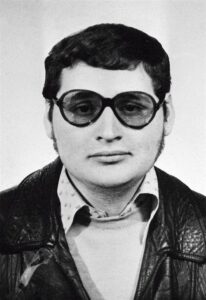
Carlos the Jackal
Nan Robertson in a special to The New York Times on July 11, 1975 published the article “FRANCE EXPELLING 3 CUBAN OFFICIALS” that reports on the link between Cuban diplomats and Carlos the Jackal.
“France expelled three high‐ranking Cuban diplomats today in connection with the worldwide search for a man called Carlos, who is believed to be an important link in an international terrorist network.” […]”The French Interior Ministry said that investigators were convinced that the terrorist network had been helped significantly by the intelligence services of “certain nations.”[…] French authorities have also said that Carlos may have been directly involved with a siege at the French Embassy in The Hague last September and a grenade attack the same month on Le Drugstore on the Left Bank here, in which 3 persons were killed and 22 wounded. France expelled three high‐ranking Cuban diplomats on July 10, 1975. ”The Cubans, according to the French Interior Ministry, were “constant visitors” to the Paris hideout of Carlos”. The Cuban diplomats on whom expulsion orders were served today were Raul Rodriguez Sainz, 32 years old, first secretary for cultural affairs; Pedro Lara Zamora, 33, deputy cultural attache, and Ernesto Reyes Herrera, 32, the chief of protocol. André Mousset, spokesman for the Interior Ministry, added that the Carlos affair was looking more and more like an “international terrorist plot.”
[ More on Cuba’s involvement in international terrorism ]
Castroism’s impact in the Western Hemisphere
Havana beginning in 1959 sent armed expeditions to Panama, Haiti, Nicaragua, Venezuela and the Dominican Republic to overthrow their governments generating chaos and blood shed.
From the start the Castro regime planned to turn the Andes into the Sierra Maestra of South America with the goal of achieving a hemisphere wide projection of power to spread their revolutionary project.
Fidel Castro was skeptical of democratic elections ushering in revolutionary change and preferred training and exporting weapons and armed guerillas to undermine existing governments
Venezuelans by 1960 understood the threat poised by the Cubans when Ernesto “Che” Guevara was giving unsolicited advice to Rómulo Betancourt, the democratically elected president of Venezuela. Guevara called for Betancourt to use the firing squad against his “rightist opponents.” In 1963 Congressional Quarterly reported on how relations deteriorated.
“Riots led by Communists and other pro-Castro elements in Caracas [in the autumn of 1960] took the lives of 13 persons and injured 100. Venezuela recalled its ambassador to Cuba, and Betancourt ordered out the army to end the rioting, which he termed an attempt to “install a regime similar to that in Cuba.”
Cuban Communist leader Blas Roca, told a Havana rally on January 23, 1963 that when the communists gained full control and “make themselves owners of the great riches in oil, aluminum and everything their earth imprisons, then all of America shall burn.” A cache of three tons of weapons was found on a Venezuelan beach in November 1963 that was to be used to disrupt the democratic elections there.
Fidel Castro would continue to agitate for revolution in Venezuela. A well documented incident occurred on May 8, 1967 and was reported by Francisco Toro in The Washington Post who described how “two small boats carrying a dozen heavily armed fighters made landfall near Machurucuto, a tiny fishing village 100 miles east of the Venezuelan capital, Caracas. Their plan was to march inland and recruit Venezuelan peasants to the cause of socialist revolution.” An all night gun battle with the Venezuelan military led to nine guerrillas dead, two captured, and one who had escaped.
This led, at first, to American governments seeking to isolate Cuba in order to protect themselves from armed expeditions.
The Castro regime achieved only one success in Latin America with armed interventions: the overthrow of the Somoza regime in Nicaragua and the installation of the Marxist-Leninist Sandinista regime led by Daniel Ortega. Fidel Castro visited in Nicaragua in 1980 to celebrate.
Robert A. Pastor, of The Carter Center in July 1992 in the report “The Carter Administration and Latin America: A Test of Principle” explained the crucial role played by the Castro regime in the Sandinista victory in Nicaragua, “by May 1979, with Cuban President Fidel Castro’s help, the three Sandinista factions had united and established a secure and ample arms flow from Cuba through Panama and Costa Rica.” The Sandinistas drove out the Somoza regime on July 19, 1979 and would remain a force there to the present day.
Cuban backed terrorism in Colombia
Efforts to subvert the Colombian government through a combination of training and arming communist guerilla groups, such as the M-19, while funding them through drug trafficking did not lead to the overthrow of the Colombian government but it led to the Castro regime being placed on the U.S. State Department’s list of state sponsors of terrorism on March 1, 1982 by the Reagan Administration.
“Fidel Castro helped the M-19 in many of its interventions in Colombia. It must even be said that M-19 troops were trained in Cuba, which separated the Cuban government from the Colombian government. Relations were broken,” said Gustavo Petro, a former member of the terrorist group M-19, and today president of Colombia,
The U.S. State Department’s State Sponsors of Terrorism list came into existence in 1979, and Cuba was added to the list in 1982 due to its links to the M-19 terrorist group in Colombia, facilitating drug smuggling to the United.States, and providing arms to M-19. Three years later, the consequences of this relationship between Havana and Colombian terrorists would shake Colombia’s governing institutions.
Forty years ago on November 6-7, 1985 the M-19 terrorist group “seized the Palace of Justice in Bogota. They took hundreds of hostages, including 25 Supreme Court judges.” The violent siege became a bloodbath, killing scores of captives, and nearly half of the Supreme Court’s judges.
Six decade relationship with the Ejército de Liberación Nacional (ELN)
Britannica reports that the “National Liberation Army (Ejército de Liberación Nacional; ELN), was created by a group of Colombian students who had studied in Cuba” in 1964. Former members of the Brigada Pro Liberación Nacional founded the ELN while on “a scholarship program” in Cuba, because they “felt the Colombian majority was excluded by the state”, according to Stanford University’s Center for International Security and Cooperation (CISAC). The ELN followed “strategies espoused by Che Guevara.”

Rex A Hudson, of the Library of Congress, in his book, CASTRO’S AMERICA DEPARTMENT: Coordinating Cuba’s Support for Marxist-Leninist Violence in the Americas published in 1988 reported that “Six FARC deserters revealed in August 1987 that various FARC fronts have Cuban advisers attached to them. Other deserters reported that Cubans also are working as advisers and instructors for the ELN and are directing its ecologically and economically disastrous sabotage of oil installations. Numerous ELN kidnappings of oil company officials and a powerful ELN car-bomb that blew up in front of the U.S. Occidental Petroleum Company in Bogotá in February 1988 demonstrated the terrorist trend of the ELN campaign.”
The kidnapping of President Belasario Betancur’s brother, a magistrate, by the ELN in November 1983 provided the first opportunity for Fidel Castro to reveal himself as the godfather of Colombia’s terrorist groups. After the kidnapping provoked a storm of national indignation, Castro, at the urging of President Betancur, publically called on the ELN to release its hostage. The ELN complied almost immediately, dropping all of its ransom demands.”
Insight Crime reported that by “the mid-1990s, the ELN reached its apex, commanding an army of close to 5,000 soldiers and at least three times that in student, union and political supporters. It regularly bombed the country’s largest oil pipelines, including those that supplied oil from BP’s and Occidental Petroleum’s fields in the Eastern Plains region, even while it siphoned from the royalties this oil provided the region. It drew revenue from war taxes levied on coca and marijuana growers, particularly in the southern part of the Bolívar department, where the ELN’s leadership had established its home base”
In November of 2017 former Cuban diplomat, Jose Antonio “Tony” Lopez was linked to terrorists responsible for the June 17, 2017 bombing in Bogota, Colombia that killed three and injured nine according to prosecutors in the South American country. A mother of one of the accused denied her son’s involvement in the attack but confirmed the link with the former Cuban diplomat. He also had links to FARC and the ELN.
Lt. Col. Geoff Demarest, JD, PhD, U.S. Army, Retired wrote an article in the July-August 2020 issue of the Military Review: The Professional Journal of the U.S. Army titled “The National Liberation Army (ELN), Early 2020” where he describes how “the ELN as a cohesive identity is subordinate strategically to the Partido Comunista de Cuba (Communist Party of Cuba, or PCC) and to the Partido Socialista Unido de Venezuela (United Socialist Party of Venezuela, or PSUV). The PSUV, in any case, is a subordinate sister of the PCC, which is the apex geopolitical organization.”1
According to Lt. Col. Geoff Demarest, “[t]he ELN is currently the go-to Bolivarian assault force that has been and will increasingly be used to attack targets within Colombian territory. These attacks are part of a multiform war waged by the PCC and the PSUV to gain control over most of northern South America. The PCC has effectively consolidated strategic control over Venezuelan geography, at least in terms of international interference with that control. The principal theater of war is now Colombia.”
The ELN’s attacks on the Colombian government with safe harbor in Venezuela, aided by Cuban intelligence agents, and its leadership protected and oriented by the Cuban government in Havana falls under the legal definition of international terrorism.
The terrorism and killing continues in Colombia today. According to the U.S State Department in 2021, Havana “refused Colombia’s requests to extradite ten ELN leaders living in Havana after the group claimed responsibility for the January 2019 bombing of a Bogota police academy that killed 22 people and injured more than 87 others.” It also mentioned that “the Cuban government’s support for FARC dissidents and the ELN continues beyond Cuba’s borders as well, and the regime’s support of Maduro has created a permissive environment for international terrorists to live and thrive within Venezuela.”
Despite this, it is important to underscore and repeat, that today both Gustavo Petro, the current president of Colombia, and Claudia Sheinbaum, the current president of
The Castro regime’s efforts in Venezuela would not begin to bear fruit until December 1994 with the arrival of Hugo Chavez in Havana to a hero’s welcome following two years in prison for a failed 1992 coup attempt in Venezuela.
Four years later Chavez had won the presidency of Venezuela and the Castro regime finally had its entry to the wealthy oil rich South American nation. By 2007, Chávez had declared that Cuba and Venezuela were a single nation. “Deep down,” he said, “we are one single government.”
Maduro’s succession planned in Havana
When Hugo Chavez died in 2013 the succession of Nicolas Maduro to the presidency of Venezuela was planned in Havana.
On July 19, 2017 the Secretary General of the Organization of American States, Luis Almagro testified before US lawmakers that “[t]here are currently about 15,000 Cubans in Venezuela … It’s like an occupation army from Cuba in Venezuela.”
On January 20, 2020 Nicolas Maduro at the XX Meeting of the Intergovernmental Commission of the Cuba-Venezuela Integral Cooperation Agreement reaffirmed the colonial status of his government stating, “I’ve told our older brother and protector, Raúl Castro Ruz, and he agrees. And it has been discussed in this mixed commission and we agree. The ambassadors are practically part of the Council of Ministers, the ambassador of Cuba has open doors in each ministry to coordinate, to move forward.”
Attorney, human rights defender, and executive director of the Casla Institute, an organization that promotes democracy and the rule of law based in the Czech Republic ,Tamara Suju, over Twitter revealed that Maduro was still dissembling on the extent of
the Cuban Ambassador’s existing role in Venezuela:
“The ambassador of the Cuban dictatorship is already an integral part of the Operational Strategic Command of the Bolivarian National Armed Forces (CEOFAN) and makes decisions. No one from the island enters or leaves without him knowing. All missions and Cuban militia report to him. Dagoberto Rodríguez is the ‘Boss’,
Below is the video of Nicolas Maduro (in Spanish) from Monday, January 20, 2020 explicitly outlining his subservience to the Cuban Ambassador.
Weaponizing migration against the United States
Havana weaponized migration in order to obtain more concessions over the four years of the Joe Biden Administration, and with the help of Mexican presidents Manuel Lopez Obrador and Claudia Sheinbaum sought even more.
The Cuban dictatorship had reason to double down, because the Biden Administration repeatedly rewarded the communist regime, and it did not advance U.S. interests.
The State Department in May 2022 provided concessions in the hope of decreasing migration from Cuba. At that point the number of Cubans who had entered the United States during the Biden Presidency was 180,020, and since then another 553,205 entered.

Playing the long game: Targeting higher education
The Cuban dictatorship, primarily through its intelligence services such as the General Directorate of Intelligence (DGI, now known as the Cuban Intelligence Services or CuIS), has engaged in targeted efforts to influence and infiltrate U.S. higher education institutions for over six decades.
These activities have focused on espionage, recruitment of agents of influence, and the acquisition of sensitive information or expertise. This has been a long-standing strategy, dating back to the Cold War era, with operations continuing to the present day.
Key Methods of Influence and Recruitment
Cuban intelligence prioritizes universities for their access to emerging leaders, researchers, and unclassified but valuable data (e.g., in science, policy, or technology).
Common tactics include:
- Ideological grooming and mentorship: Approaching idealistic or vulnerable students (often via cultural events, study abroad, or leftist student groups) with promises of revolutionary ideals, economic incentives post-embargo, or blackmail. Professors or academic mentors are recruited to “spot and assess” promising individuals.
- Clandestine operations: Using encrypted communications, dead drops, or intermediaries (e.g., via the Cuban Mission to the UN or cultural centers) to avoid detection. Recruits may be tasked with sharing research, influencing peers, or accessing classified info later in their careers.
- Exploiting exchanges: Leveraging academic programs or delegations to embed officers or identify targets during visits.
These efforts are low-cost and ideology-driven rather than financially motivated, appealing to anti-imperialist sentiments.
Some Notable Examples
- Historical Cases (Pre-2020):
- Ana Belen Montes: Recruited by Cuban intelligence while a Johns Hopkins University student in the 1980s. She rose to become a top U.S. Defense Intelligence Agency analyst, passing classified secrets on Latin America for over 16 years before her 2001 arrest. A 2002 analysis by former Cuban intelligence officer José Cohen detailed how the DGI prioritized universities for their access to sensitive research, policy influencers, and future leaders. For instance, in 1984, a Cuban student-spy at Johns Hopkins University identified Ana Montes—a graduate student in international studies—as a recruit due to her grievances with US-Cuba policy. Montes went on to become a high-level Defense Intelligence Agency analyst, passing classified information to Cuba for nearly 17 years before her 2001 arrest. This case exemplifies how Cuba used academic environments to spot and cultivate long-term assets.
- Montes got people killed. She revealed to Cuban intelligence the true names of at least 4 covert U.S. agents operating in Havana. The DGI told Ana Belen Montes, “We were waiting for him here with open arms,” about one of the agents she exposed. Weeks after her DIA-sponsored trip to a Salvadoran military camp in early 1987 (where US soldiers were training Contra rebels), the outpost was attacked, killing one American Green Beret and the 43 Nicaraguans who’d been fighting beside him. After her arrest, Montes showed no remorse for the lives she likely ended, saying “Espionage always hurts someone.”
- Carlos and Elsa Alvarez: Carlos, a psychology professor at Florida International University, admitted in 2007 he spent nearly 30 years sharing information with the Cuban government about Miami’s exile community. He pleaded guilty to conspiring to act as an unregistered Cuban agent and was sentenced to five years in prison. His wife Elsa pleaded guilty to concealing her husband’s actions and was sentenced to three years.
- The Venceremos Brigade as a Radicalization Pipeline: Launched in 1969 by US Students for a Democratic Society (SDS) with Cuban government support, the Venceremos (”We Shall Overcome”) Brigade sent thousands of American students to Cuba for “solidarity work” brigades, ostensibly to harvest sugarcane and defy the US embargo. In reality, participants underwent intensive political indoctrination, including sessions on revolutionary theory and anti-imperialism, often led by Cuban officials. Over 10,000 US youth participated by the 1980s, with many returning as vocal advocates for Cuban-style socialism, organizing campus protests and influencing leftist movements. Critics, including US intelligence reports, described it as a deliberate subversion tool to radicalize youth and embed pro-communist networks in US institutions.
- Broader Ideological Subversion: During the 1970s-1990s, Cuba’s DGI established “academic fronts” through conferences, exchange programs, and funded research to normalize its narrative in US syllabi. This included downplaying Cuba’s human rights abuses while amplifying critiques of US foreign policy. Declassified FBI files from the era document Cuban agents posing as scholars to infiltrate departments of Latin American studies, where they influenced curricula and recruited sympathetic faculty.
- Ongoing and Recent Operations (2020–2025):
- A multi-decade network (1970s–2000s) run by U.S. professors and researchers at two unnamed prominent universities assessed up to 50 students and colleagues, successfully recruiting at least six. It shared biological research and reagents with Cuba, which then passed data to allies like North Korea and Russia. Operations involved grooming recruits through dissertation supervision and secret CuIS meetings.
- Victor Manuel Rocha: Radicalized during his time at Yale University in the late 1960s and early 1970s amid campus protests and leftist activism. He later became a U.S. ambassador, spying for Havana for over 40 years until his 2023 arrest. Rocha served on the National Security Council and as U.S. Ambassador to Bolivia—all the while secretly operating as a Cuban agent. He was sentenced to 15 years in prison on April 12, 2024. His case, exposed in 2023 but culminating in 2024, exemplifies how Cuban operations exploit university environments to groom future officials for long-term infiltration of U.S. policy and national security circles.
- Influence on Campus Protests (May 2024): A Wall Street Journal analysis linked Cuban intelligence to fueling anti-Israel protests on U.S. campuses, noting that “outside agitators” shared the regime’s anti-imperialist ideology and received practical support from Havana. This reflects Cuba’s strategy of leveraging academic activism to promote pro-regime narratives and destabilize U.S. discourse, building on historical burrowing into educational institutions.
- Cultural and Digital Influence: Cuba funds pro-regime events at US universities, such as film festivals and lectures that romanticize the revolution, contributing to surveys showing 20-30% of college students viewing Cuba favorably over the US (e.g., a 2025 poll where many praised its “socialist” education system). Social media amplifies this, with Cuban state accounts targeting Gen Z activists.
Broader Context and U.S. Response
Havana’s strategy aligns with its foreign policy goals: countering U.S. influence in the Americas, infiltrating the U.S. government to gather intel and sell it to hostile powers, promoting pro-communist narratives, and shaping U.S. policy.
U.S. counterintelligence has disrupted networks. Although, American universities are encouraged to implement training on foreign intelligence threats, vet foreign interactions, and report suspicious activities (e.g., undisclosed meetings with Cuban officials or requests for sensitive research) it appears that the threat is underestimated.
“Positive” academic ties, like student exchanges resumed in 2014, continue despite espionage risks, as they supposedly foster people-to-people diplomacy, but place U.S. students, and academics at the mercy of the Cuban intelligence services.
In summary, the Cuban government’s role is primarily covert and opportunistic, leveraging academia for intelligence gains and recruiting agents in a long game to subvert government institutions, and profit from selling U.S. secrets to hostile foreign actors. For deeper reading, refer to declassified FBI reports or books like The Main Enemy on Cold War-era operations.
Killing U.S. Citizens at home and around the world
From Vietnam to New York City the Cuban dictatorship has caused the death and suffering of Americans to advance their revolutionary objectives.

Frank Connor killed by Castro backed terrorists.
The Puerto Rican terrorist group, Fuerzas Armadas de Liberación Nacional Puertorriqueña, (FALN), ‘FALN was started in the mid-1960’s with a nucleus . . . that received advanced training in Cuba. From the mid-1970s through the mid-1980s, the FALN carried out more than 130 bombings, including in the United States killing five Americans in the New York City area. There were many other terrorist groups trained, and equipped in Cuba over the past 66 years, but for the sake of brevity will focus on the FALN.
The FALN was responsible for the January 24, 1975 explosion at Fraunces Tavern, which killed Alejandro Berger (28), James Gezork (32), Frank Connor (33), Harold H. Sherburne (66) and wounded 63 others; a bombing spree in New York City in August 1977 that killed Charles Steinberg, (age 26), injured six, and forced the evacuation of 100,000 office workers; and the purposeful targeting and maiming of four police officers, among many other crimes. Frank Thomas Connor was having lunch with clients when the bomb exploded, his body was pulverized and his life was ended.
Terrorists continue to be harbored by the dictatorship in Cuba, but high ranking officials play dumb
Mehdi Hasan sat down with Cuban Deputy Foreign Minister Carlos Fernández de Cossío to discuss relations with the United States and raised the question of Puerto Rican bomb maker and terrorist harbored by the Cuban government today. The video made public on September 24, 2025 of the interview conducted in New York City has an exchange beginning at 5 minutes 36 seconds where the seasoned Cuban diplomat pretends not to know who Guillermo Morales is, but still goes on the offensive.
Mehdi Hasan: “There are believed to be 70 U.S. fugitives now based in Cuba, including people like William Morales, who was a bomb maker for a militant Puerto Rican group that bombed a New York tavern in 1975 killing four people. He escaped from a US prison, went to Mexico I believe, and since has been welcomed in Cuba where he has been living. Why not hand over people like Morales to the US, and get yourself taken off that list? Why give them asylum? These are people who have been convicted of serious crimes.
Carlos Fernández de Cossío: This is a list alleged by the U.S. with no evidence of whatsoever of what they are claiming about these people.
Mehdi Hasan: But William Morales lives in Cuba. You’re not denying he is in Cuba.
Carlos Fernández de Cossío: I’m not accepting it. I don’t event know if he is living in Cuba. I learned about William Morales because I read it in the news.
Mehdi Hasan: You haven’t checked to see if there is a wanted terrorist living on Cuban soil?
Carlos Fernández de Cossío: If there was someone like that in Cuba he would be protected.
Fifty years ago on January 24, 1975, the Havana-backed Puerto Rican terrorist group Armed Forces for National Liberation (FALN) carried out a bombing attack at lunch time at the Fraunces Tavern in New York City that claimed the lives of Alejandro Berger, 28; Frank Connor, 33; James Gezork ,32; and Harold Sherburne, 66; and injured 63 others. The FALN’s bomb maker William Morales, a fugitive from U.S. justice, is harbored today in Cuba by the communist dictatorship.
Vietnam
Communist Cuba’s intelligence services tortured American prisoners of war in Vietnam. During the Vietnam War, the Cuban government sent advisers to Vietnam who tortured U.S. prisoners of war between 1967 and 1969 in what became known as “The Cuban Program.” It was an effort to demonstrate to the Vietnamese how to most effectively break the will of American soldiers.
An account of what took place is found in Honor Bound: American Prisoners of War in Southeast Asia, 1961-1973 by Stuart I. Rochester, Frederick T. Kiley and published by the Naval Institute Press in 1999.
In May of 2005 official media of the Castro regime revealed that Cuban military engineers “took part in the widening of the famous Ho Chi Minh Trail in the midst of Vietnam’s war with the United States,” and a former participant retired Cuban colonel Roberto Leon who called it “one of the greatest secrets” of the 1965-1975 war, “when he led a team of 23 Cuban military engineers and about 50 Vietnamese nationals in work on the trail over seven months.”
According to Leon, Cubans began work on the trail in 1973 after Fidel Castro’s September 1973 visit, when Vietnamese authorities asked the Cuban dictator for technical help on expanding the trail.
In 2008, Senator John McCain said that American POWs imprisoned with him in Hanoi had been tortured “by a couple of Cubans.”
On December 2, 2015, the Ambassador of Vietnam in Havana, Duong Minh spoke to Granma, the official publication of the Cuban Communist Party, and went into greater detail:
The government of Cuba also helped in the construction of major works in Vietnam in the midst of the war, including the Victory Hotel in Hanoi, and a highway stretching over 40km close to the capital, vital in linking strategic points during the conflict. “Our Cuban brothers also contributed to the building of the historic Ho Chi Minh Trail, used to transport food, medicine, arms and ammunition from north to south, and a 400-bed hospital in the midst of the conflict zone.”
Vietnam veteran Michael D. Benge testified before Congress on November 4, 1999. He was not tortured by the Cubans, but he knew other American prisoners who were tortured by them. However he was interrogated by a Spanish speaking individual that he was able to later identify as a Cuban official. He was interviewed by Jamie Glazov in 2016.